
What are the best incentives that builders offer when you’re buying a new home in DeForest, WI?
Builders in DeForest are offering some of the most generous incentives in years, including mortgage rate buydowns, closing cost credits up to $15,000, design center upgrades worth tens of thousands, and direct price reductions averaging 6%.
Why Builder Incentives in DeForest Matter Right Now
Here’s the deal: if you’ve been eyeing new construction in DeForest, your timing is actually pretty great. According to the NAHB, 60% of builders are currently offering some form of incentive to attract buyers as of 2026. That number jumps to 66% when you look at NAHB data from September 2026.
DeForest is one of Dane County’s fastest-growing communities. Wisconsin Department of Administration 2025 estimates put the village at 13,101 residents, up 21.18% from 2020. Village Administrator Bill Chang has confirmed continued expansion into 2026, pointing to new housing developments near Fleet Farm, at the DeForest Yards, and along River Road. With roughly 140 lots approved at Heritage Gardens and another 145 expected on the north side of the Conservancy, builders are competing for your attention.
So what does that competition mean for you? It means leverage. And having closed over 300 transactions across Dane County over the past 12 years, I can tell you that the incentive landscape right now is unlike anything I’ve seen in my career. Let me walk you through exactly what’s on the table.
Mortgage Rate Buydowns Are the Most Valuable Incentive in DeForest
If you only pay attention to one section of this post, make it this one. The permanent rate buydown is the single most impactful incentive a builder can offer you in 2026, and it’s not even close.
How 2-1 Buydowns Work
A 2-1 buydown temporarily reduces your interest rate for the first two years of your loan. Year one, your rate drops 2% below the note rate. Year two, it drops 1% below. Then you settle into the permanent rate from year three onward. The builder funds an escrow account that covers the difference.
Here’s what that looks like in real dollars: on a $400,000 loan at 6.65%, a 2-1 buydown gives you a year-one payment of about $2,061 per month (at 4.65%), a year-two payment of roughly $2,315 (at 5.65%), and then your permanent rate of $2,565 kicks in from year three on. The builder is essentially subsidizing $12,000 to $15,000 in interest costs on your behalf.
Why Permanent Buydowns Beat Flashy Upgrades
What I tell my clients all the time is this: a quartz countertop upgrade might cost $5,000 and look great, but a permanent rate buydown protects your equity for the life of the loan. As rates stabilize near 6%, locking in a lower permanent rate is real, lasting money in your pocket. That kitchen upgrade? You can always add it later.
Some builders are even offering 3-2-1 buydowns, where year one is 3% below, year two is 2% below, and year three is 1% below your note rate. If you’re buying in Savannah Brooks or Conservancy Place, where newly built homes average $646,981 according to current MLS data, that buydown can represent serious monthly savings during those critical first years of homeownership.
Closing Cost Credits That Reduce Your Cash to Close in DeForest
You already know that buying a home requires more than just the down payment. There are lender fees, title insurance, recording fees, prepaid taxes, and homeowner’s insurance to cover. In DeForest, where property taxes on a $500,000 home run roughly $9,000 to $11,000 annually (combining the Village’s $5.86 per $1,000 municipal mill rate with county, school, and state portions), those prepaids add up fast.
That’s where closing cost credits come in. In 2026, builder closing cost credits typically range from $5,000 to $15,000, according to industry data. Some national builders are going even further. Drees Homes, for example, has offered up to $10,000 toward closing costs on new construction.
For a buyer looking at Diamond Village, where new construction starts around $410,000 to $425,000, a $10,000 closing cost credit can be the difference between comfortably closing and scrambling to find extra cash. It’s the most accessible new construction price point in DeForest right now, and pairing that entry-level pricing with a closing cost credit makes it a genuinely strong play for first-time homebuyers.
Design Center and Upgrade Credits in DeForest’s Newest Subdivisions
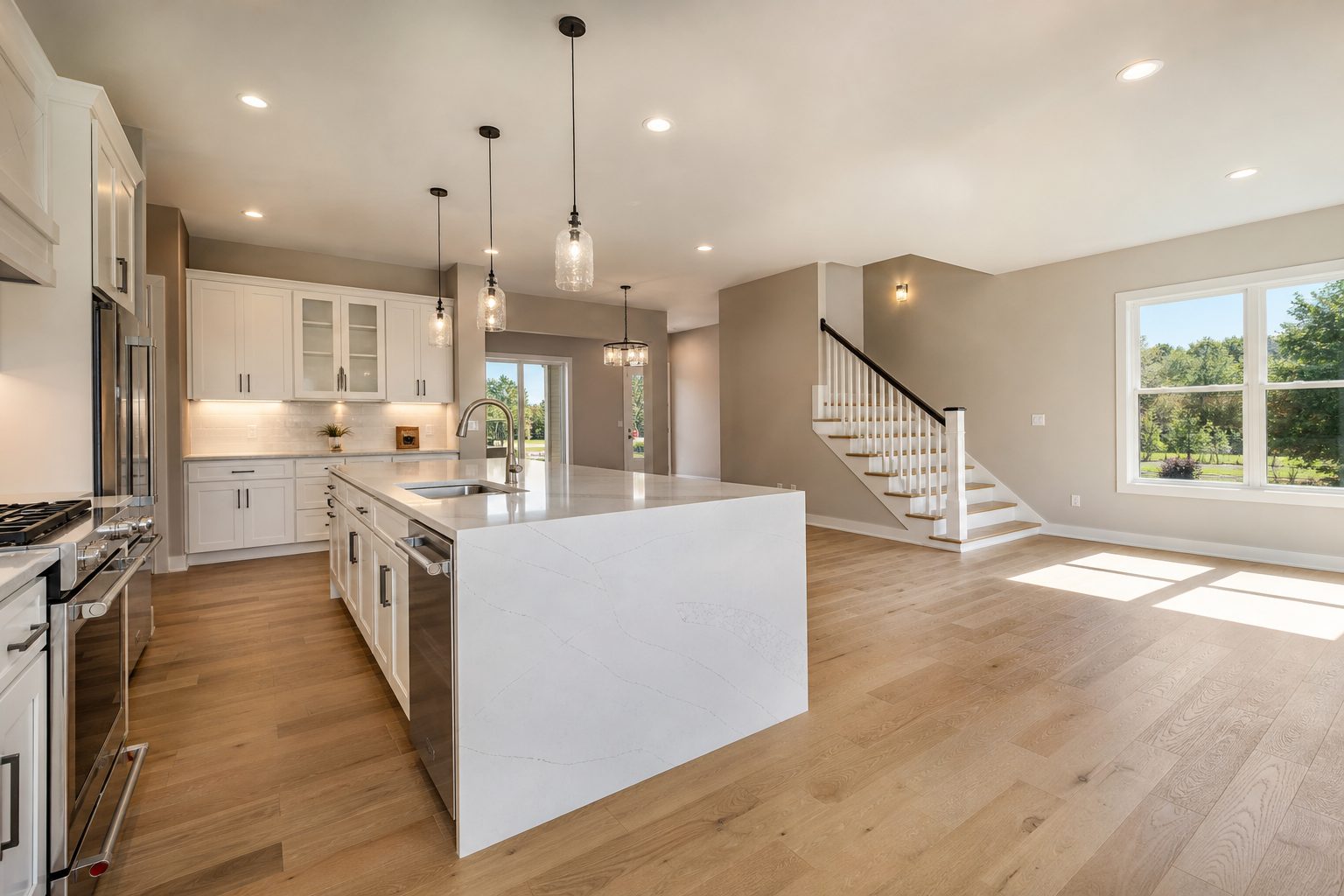
This is where things get fun. Design center credits let you customize your new home with premium finishes the builder would normally charge extra for. We’re talking quartz or granite countertops, hardwood flooring, upgraded appliances, smart home packages, and even landscaping.
According to John Burns Research and Consulting, builder incentives (combining rate buydowns, closing cost credits, and design center credits) have averaged roughly 7% to 8% of new-home sale prices through 2026, well above historical norms. On a $650,000 new build along Stonecrop Way in Rivers Turn, that could translate to $45,000 or more in total incentive value.
Here’s what real-world upgrade credits look like right now from some active builders nationally:
- David Weekley Homes: 7% of the base price in flex dollars, up to $40,000, applicable toward design selections, pricing discounts, or financing incentives
- Drees Homes: Up to $50,000 toward Design Center upgrades like hardwood floors, premium countertops, and custom trim
- Partners in Building: A $30,000 Design Center incentive on custom homes between November and December 2026
What I always recommend is making sure you understand *which* upgrades carry the most resale value. In DeForest’s west-side subdivisions like Conservancy Place and Savannah Brooks, buyers value open-concept kitchens, finished lower levels, and energy-efficient mechanicals. Those are the upgrades worth prioritizing with your credit.
Direct Price Reductions and What They Mean for DeForest Buyers
Sometimes the best incentive is the simplest one: a lower price. The NAHB’s August 2026 survey found that 35% of builders are cutting list prices outright, by an average of 6%.
Let’s put that into DeForest context. On a new construction home priced at $650,000 (right in the range for Rivers Turn or Savannah Brooks), a 6% price reduction saves you approximately $39,000. That’s not a coupon. That’s a meaningful shift in your mortgage balance, your monthly payment, and your equity position from day one.
PulteGroup’s incentive spend hit 10.9% of home-sale revenue in Q1 2026, roughly $54,500 on a $500,000 home, up from 8.0% the previous year, per PulteGroup’s public financials. That tells you how aggressive the national builder landscape has become.
Now, here’s the thing to watch out for. Not every price reduction is what it seems. If a builder inflated their base price before “discounting,” you’re not actually saving anything. This is exactly the kind of thing you want a real estate agent reviewing on your behalf. With 48 five-star reviews and a specialty in new construction, I spend a lot of time digging into builder pricing to make sure my clients are getting a genuinely good deal, not just a marketing spin.
The Preferred Lender Trap: How to Evaluate Builder Financing in DeForest
Almost every builder will steer you toward their “preferred lender.” And honestly, the incentives tied to using that lender can be significant: rate buydowns, additional closing cost credits, or upgrade allowances worth $10,000 to $20,000.
But here’s the catch. The builder’s preferred lender often carries a base rate that’s 0.25% to 0.50% higher than what you’d get shopping independently. What I tell every buyer walking into a DeForest model home is this: get quotes from both the builder’s lender AND at least two independent lenders. Then compare the total cost over five to seven years, factoring in monthly payments plus closing costs plus incentive value.
Here’s a quick example. If the builder’s lender saves you $10,000 upfront but costs $150 more per month than a competing lender, it takes 67 months (over five and a half years) just to break even. If you plan to refinance or sell before that, the “incentive” actually costs you money.
DeForest sits just 20 minutes north of Madison via I-90/94, with a great school district and quick interstate access. That combination means strong resale demand. So yes, there’s a good chance you’ll be in a position to refinance if rates drop. But don’t bank on it when making today’s math work.
HOA Credits, Warranty Extensions, and the Smaller Incentives Worth Knowing
Beyond the big-ticket items, some builders sweeten the deal with extras that add up:
- 1 to 2 years of HOA dues paid by the builder
- Extended home warranty coverage beyond the standard one-year builder warranty
- Free landscaping or fencing packages
- Appliance upgrades included at no cost
These smaller incentives are typically worth $2,000 to $5,000 over the coverage period. They might not grab headlines, but when you’re furnishing a brand-new home in Hidden Hills or Bear Tree Farms (where Tim O’Brien Homes has models starting from the mid-$600s at 4059 Royal View Drive), every dollar you don’t spend on landscaping is a dollar toward that sectional couch you’ve been eyeing.
Frequently Asked Questions About Builder Incentives in DeForest
What is the most common builder incentive in 2026?
According to the NAHB, mortgage rate buydowns and closing cost credits are the most widely offered incentives as of 2026. Approximately 60% of builders nationally are offering some form of buyer incentive, with temporary rate buydowns (2-1 and 3-2-1 structures) being the most popular because they directly lower your monthly payment during the first years of ownership.
How much are builder incentives worth on a DeForest new construction home?
John Burns Research and Consulting estimates that builder incentives have averaged roughly 7% to 8% of new-home sale prices through 2026. On a DeForest new build averaging $646,981 (per current MLS data), that could represent $45,000 to $52,000 in total incentive value combining rate buydowns, credits, and upgrades.
Can you negotiate builder incentives in DeForest?
Yes, and you should. Builders in competitive subdivisions like Conservancy Place and Savannah Brooks often have flexibility, especially on inventory homes (homes already completed or nearly finished). Having a real estate agent represent you costs you nothing extra in most new construction transactions and gives you an experienced negotiator at the table.
What is a 2-1 buydown and how does it save me money?
A 2-1 buydown reduces your mortgage interest rate by 2% in year one and 1% in year two, then reverts to your permanent rate. On a $400,000 loan at 6.65%, this structure saves you roughly $12,000 to $15,000 in interest costs over the first two years, funded entirely by the builder through an escrow account.
Should I use the builder’s preferred lender in DeForest?
Compare carefully. Builder-preferred lenders often offer compelling incentives ($10,000 to $20,000 in credits or buydowns), but their base rates may be 0.25% to 0.50% higher than independent lenders. Calculate total cost over five to seven years before committing. If the higher rate costs you more than the incentive saves, shop elsewhere.
What new construction subdivisions are active in DeForest right now?
DeForest has robust new construction activity across multiple price tiers, including Savannah Brooks ($700,000 to $975,000), Conservancy Place ($530,000 to $890,000), Rivers Turn 3rd Addition ($650,000 to $775,000), Hidden Hills ($555,000 to $600,000), Diamond Village ($410,000 to $425,000), and Bear Tree Farms (from the mid-$600s), according to current MLS data.
Are builder price reductions real or inflated?
Both exist. Per the NAHB’s August 2026 survey, 35% of builders are cutting list prices by an average of 6%. However, some builders inflate base pricing before applying discounts. Having your agent review comparable sales data ensures you’re getting a genuine reduction, not a marketing tactic.
What design center upgrades have the best resale value?
In DeForest’s west-side subdivisions, the upgrades with the strongest resale return tend to be kitchen finishes (quartz countertops, quality cabinetry), finished lower levels, and energy-efficient mechanicals. Cosmetic upgrades like premium paint or lighting are nice but easier to add after closing.
How fast do new construction homes sell in DeForest?
DeForest’s market moves quickly. The median days on market sits around 16, per local MLS data, and new construction phases in subdivisions like Hidden Hills and Diamond Village can sell out rapidly. Having your financing pre-approved before visiting model homes is essential.
Do builder incentives affect my home’s appraised value?
Incentives like rate buydowns and closing cost credits generally do not inflate the appraised value of your home because they’re treated as seller concessions, not additions to the purchase price. Design center upgrades, however, can contribute to higher appraised value since they’re physically part of the home.
The Bottom Line on Builder Incentives in DeForest
You’re buying in one of Dane County’s most exciting growth corridors. DeForest’s combination of a great school district, a genuinely welcoming small-town character (seriously, go grab a pie at Norske Nook on E. Holum Street and tell me I’m wrong), and that 20-minute I-90/94 commute to Madison makes it a magnet for families and young professionals alike.
The builder incentive environment in 2026 is historically generous, but every incentive needs to be evaluated in context. A flashy upgrade credit means nothing if the base price is inflated. A rate buydown is only valuable if it beats what you’d get with an independent lender.
That’s exactly the kind of analysis I do for my clients every day. If you’re exploring new construction in DeForest and want someone in your corner who understands contractor-level building details and has been doing this for over 12 years, give me a call at 608-692-1900 or visit current Wisconsin real estate market updates. I’m Rico Sabatini with Real Broker LLC, and I’d love to help you get the most out of your next home purchase.

Leave a Reply